The 3rd Inaugural Planting of Mizunara Oak Saplings
3rd Inaugural Planting of Mizunara Oak Saplings in Kofu
— Building Forests for the Future — Kōfu —
22nd May, 2026
On 22nd May 2026, we held the third annual mizunara oak tree planting in Kōfu City, Yamanashi Prefecture — the birthplace of Mr. Seiichi Koshimizu, Suntory's former Chief Blender (now Suntory Honorary Chief Blender).
This mizunara planting initiative, carried out in partnership with Kōfu City, began two years ago in 2024, and has been made possible through a portion of the annual membership fees contributed by our members.
This activity stands as tangible proof of our community, "In" (韻), giving back to Kōfu City, and allows our members to carry the identity of being "contributors to the future of the Japanese whisky industry."
We would like to once again extend our deepest gratitude to all our members.
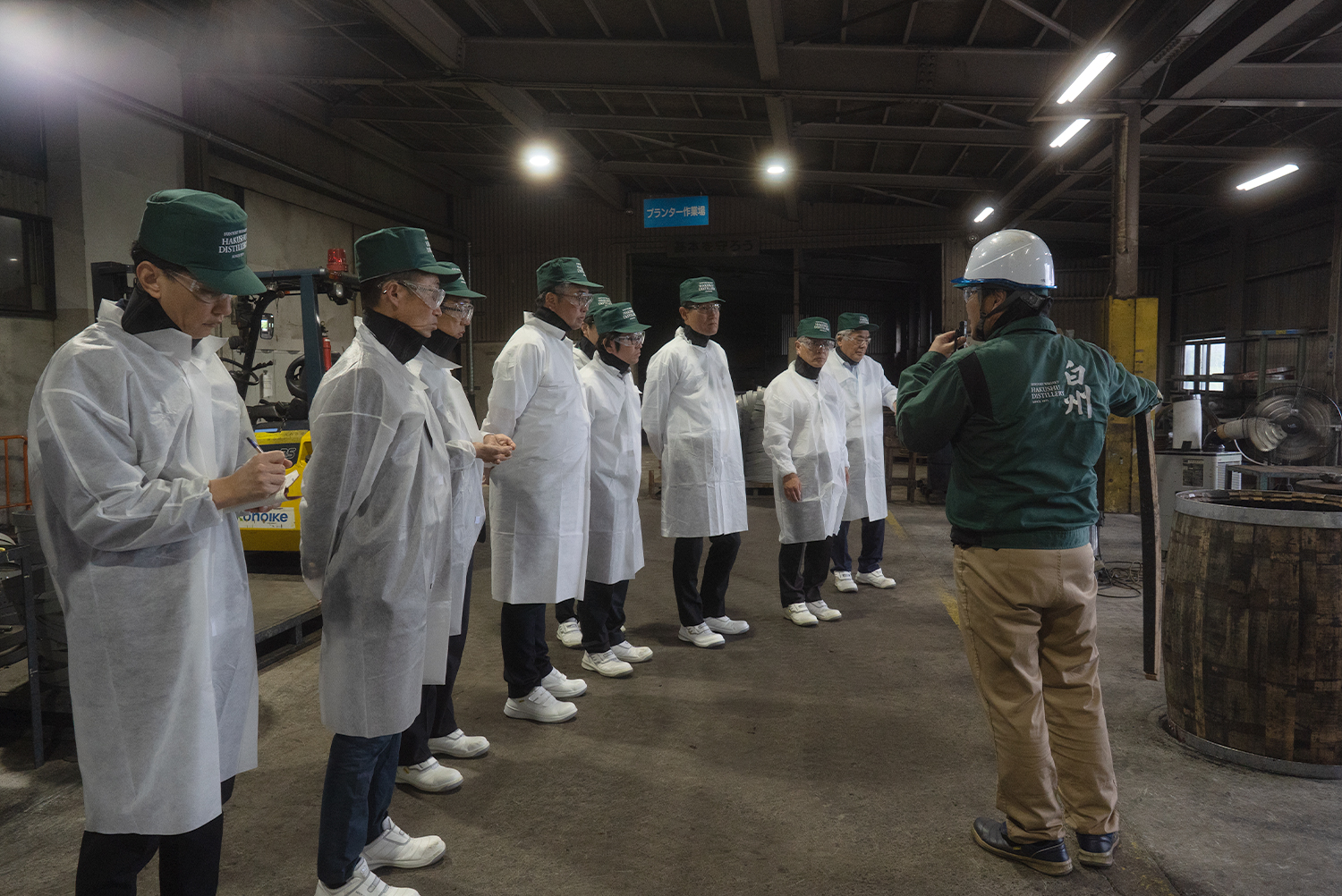
This year, on the day before the mizunara seedling planting, we were given special permission to tour the Hakushu cask workshop together with representatives from Kōfu City, observing the cask-making process firsthand.
(Tours of the Hakushu cask workshop are not normally open to the general public, due to safety considerations among other factors. However, this visit was made possible thanks to the understanding shown toward the concept behind our activities — which look ahead to future mizunara tree planting and the eventual production of mizunara casks — under our partnership agreement with Kōfu City.)
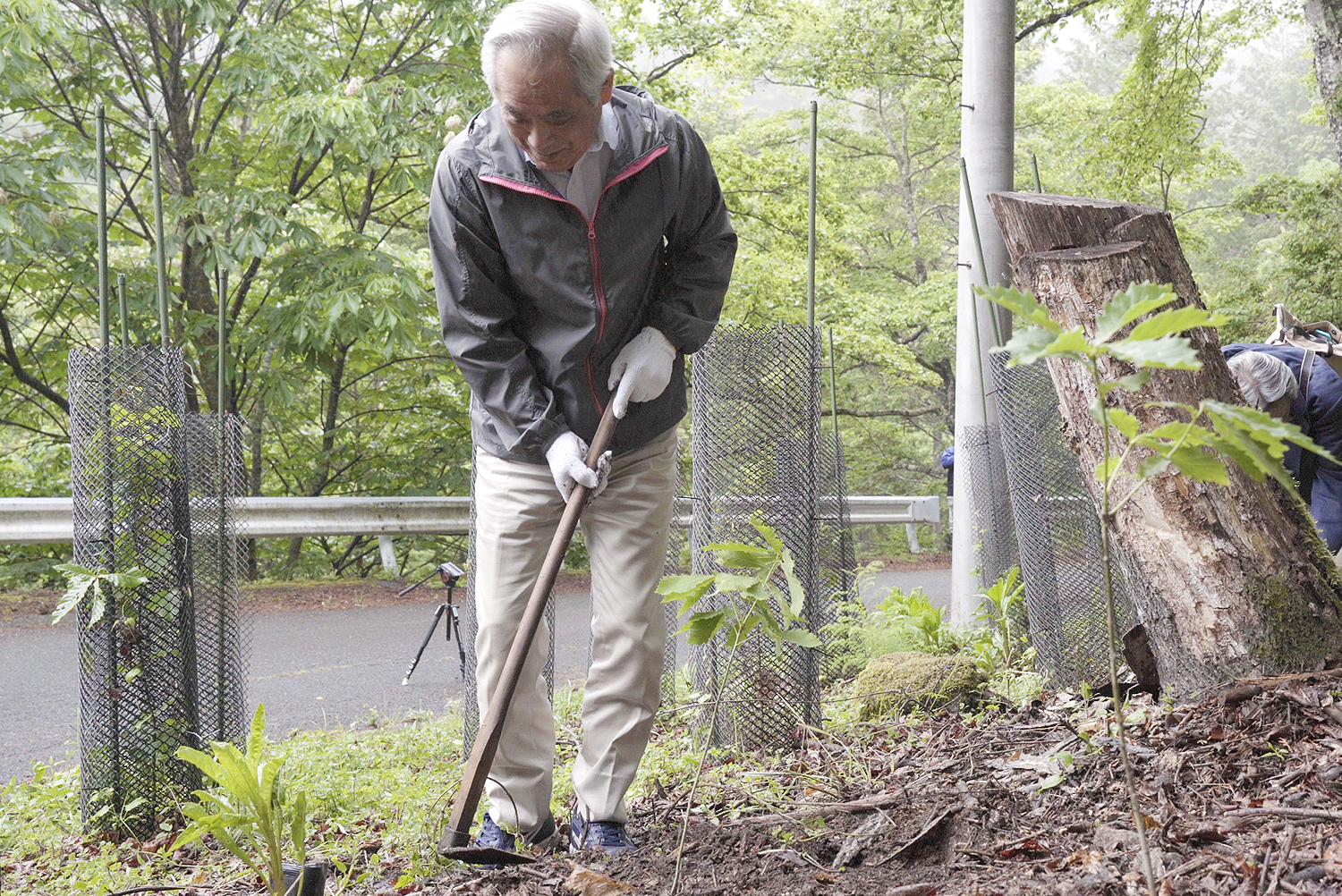
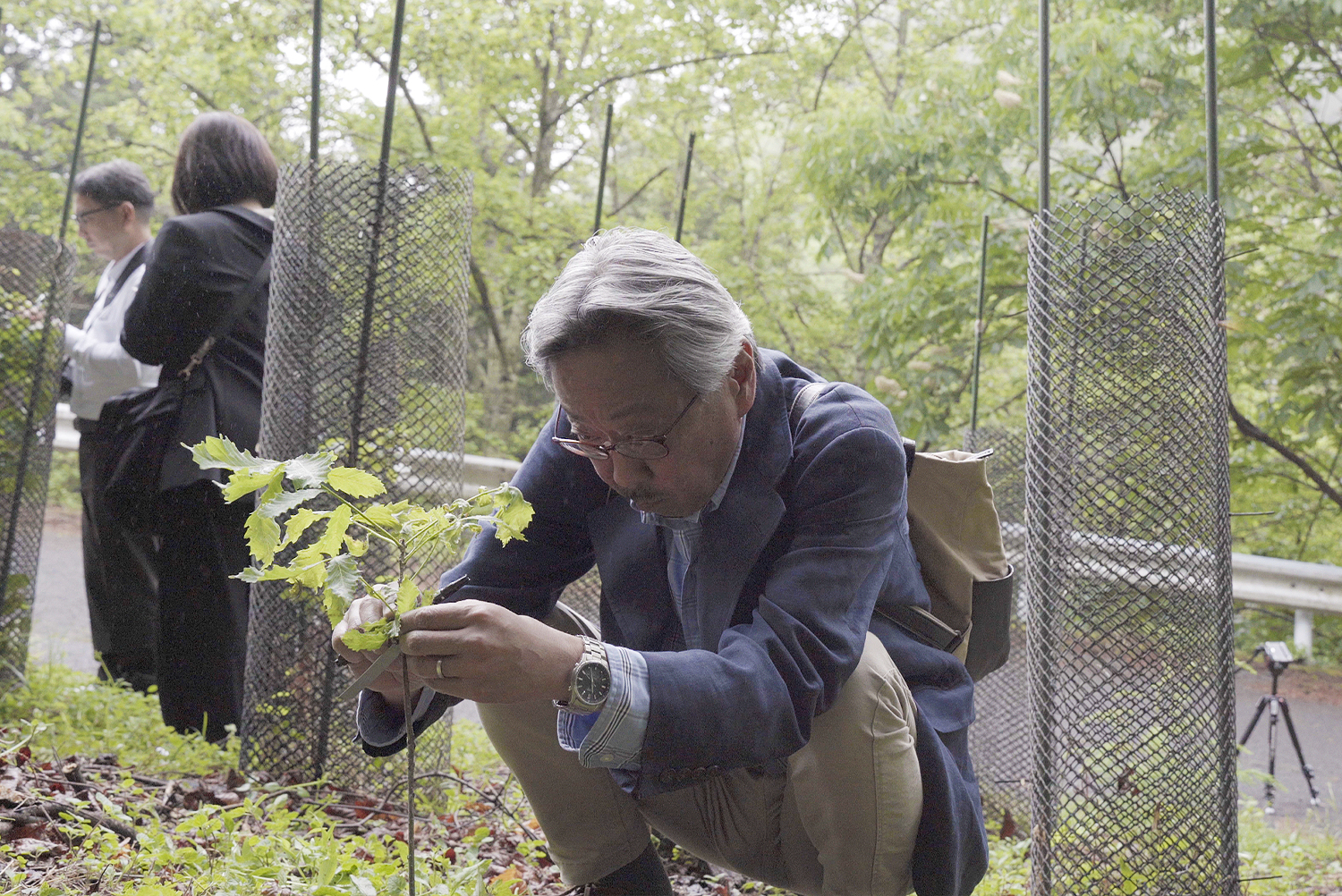
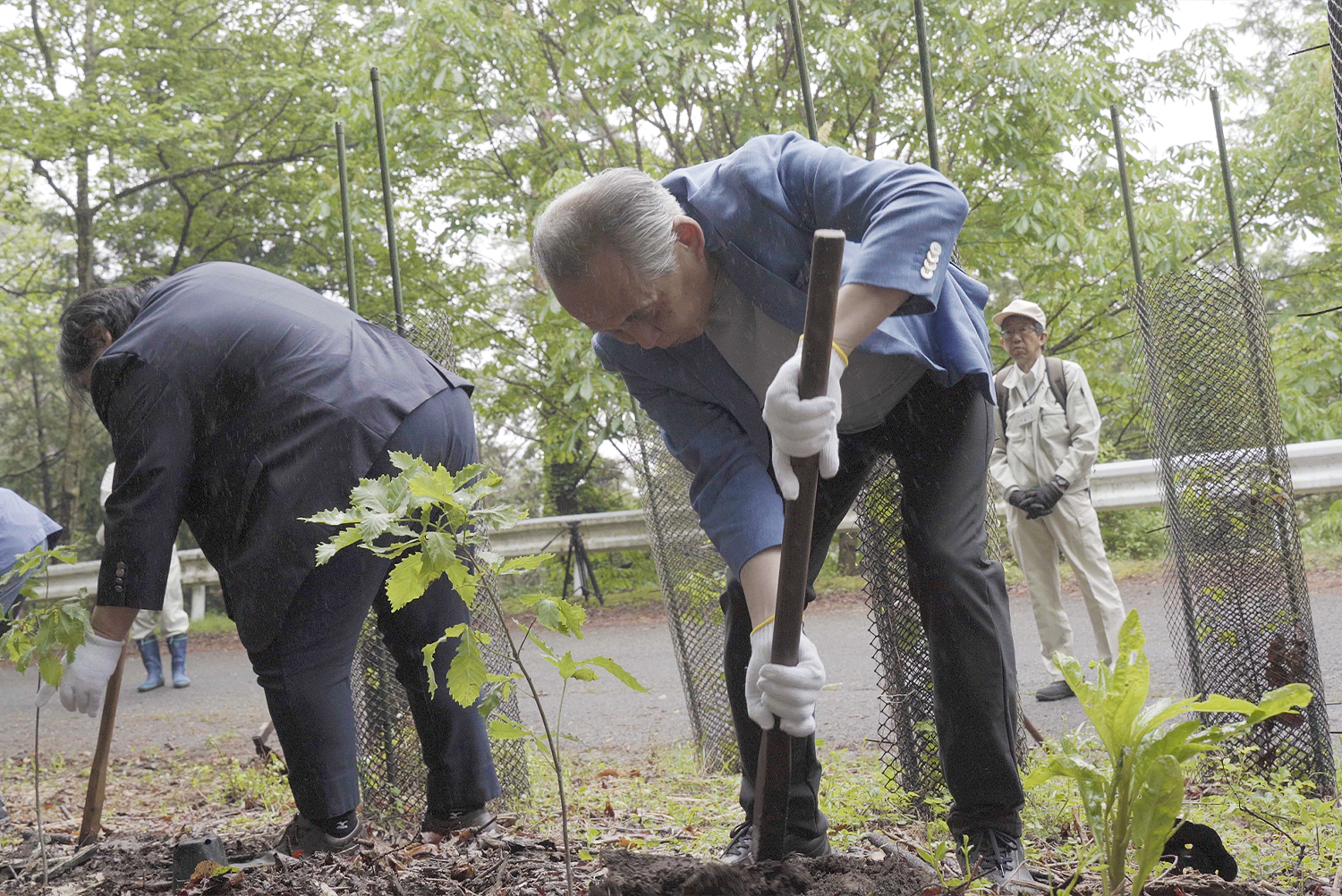
The Mizunara Tree Planting in Progress
We had been quite anxious in the lead-up to this year's mizunara planting, as heavy rain had been forecast for the scheduled date. While heavy rain did fall the day before, the weather on the day itself, 22nd May, turned out to be overcast rather than rainy, allowing the planting to go ahead safely and successfully.
The mizunara seedlings planted in previous years are also growing well, and for this third planting, we added new seedlings to the same site, continuing to build on what has already taken root.
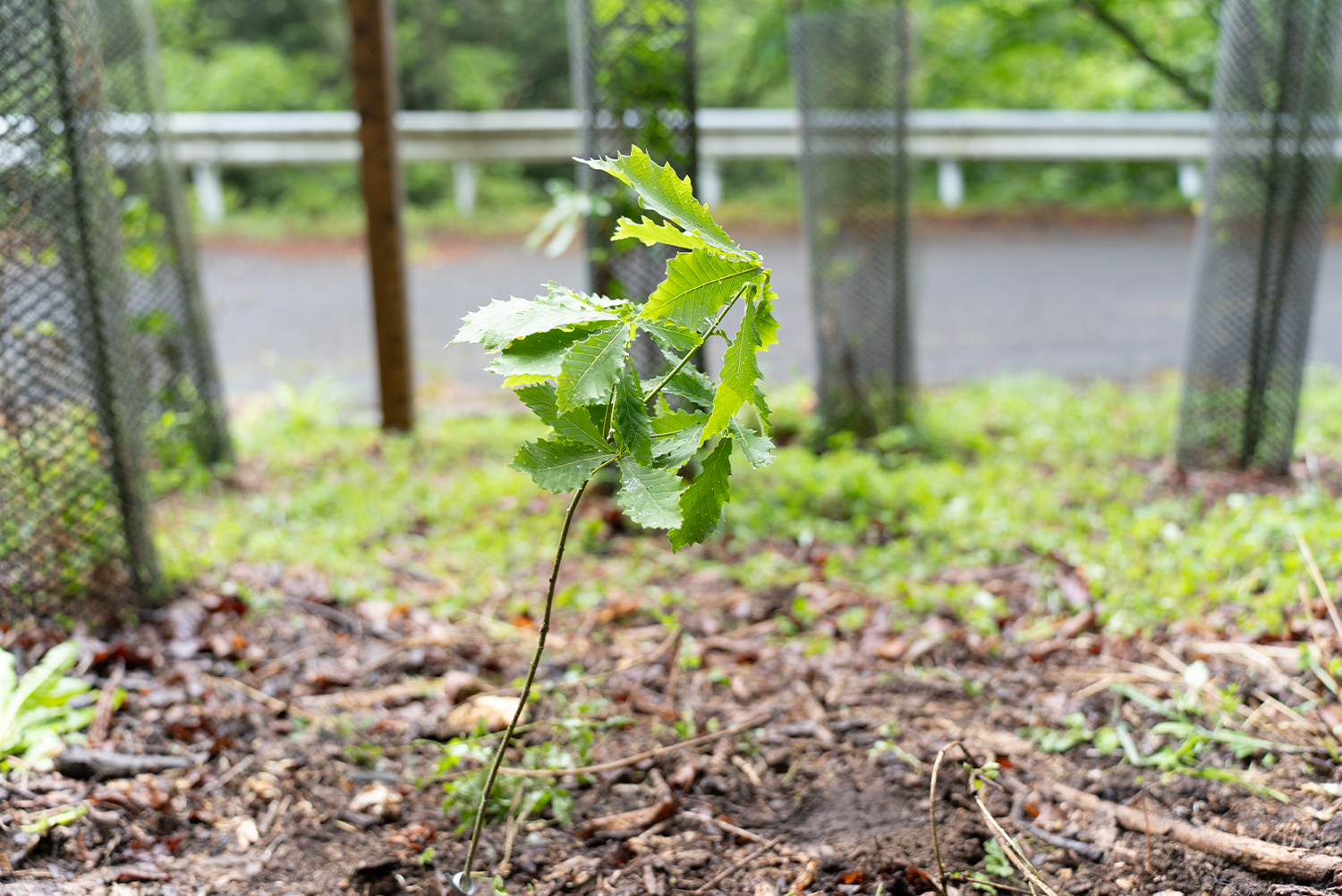
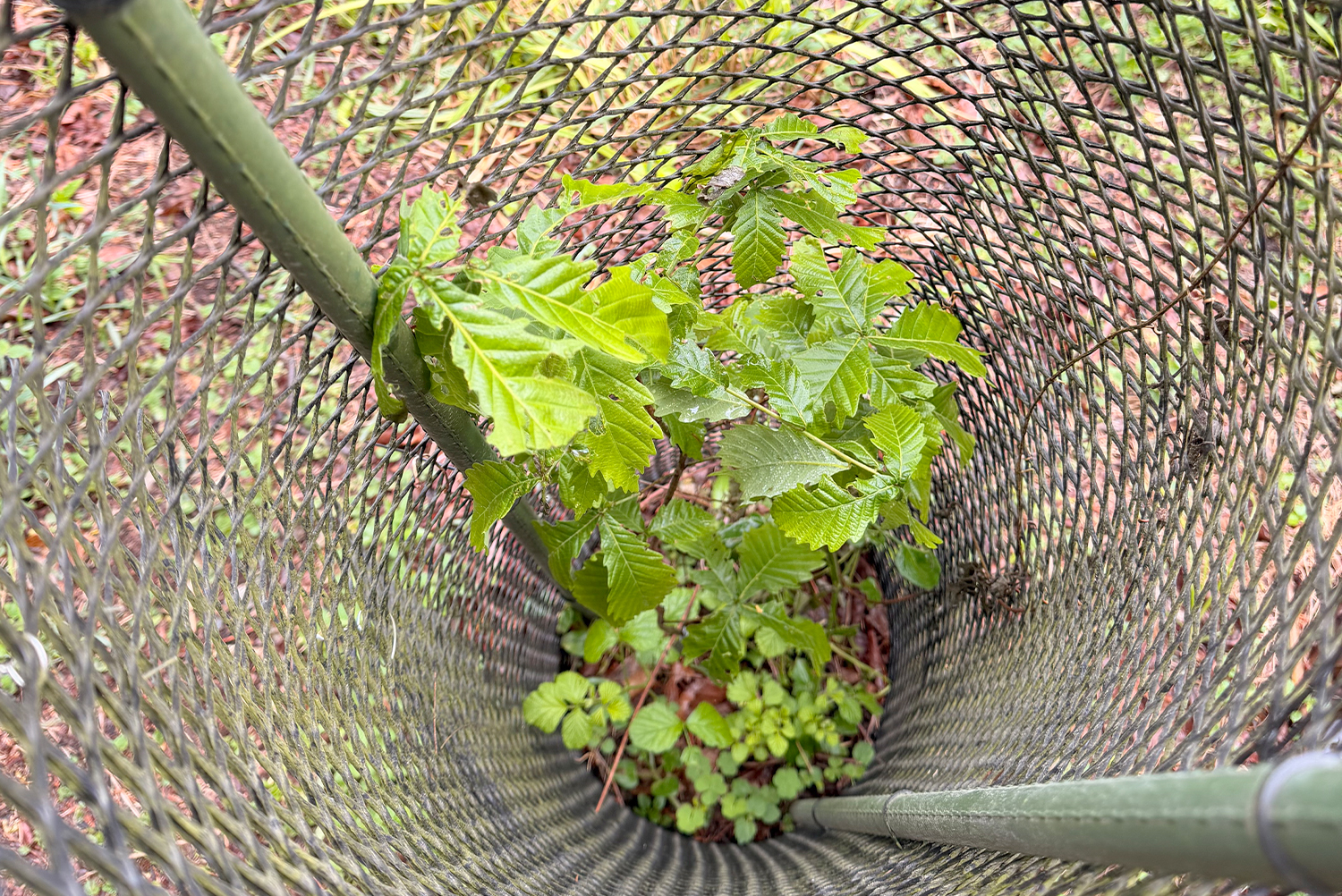
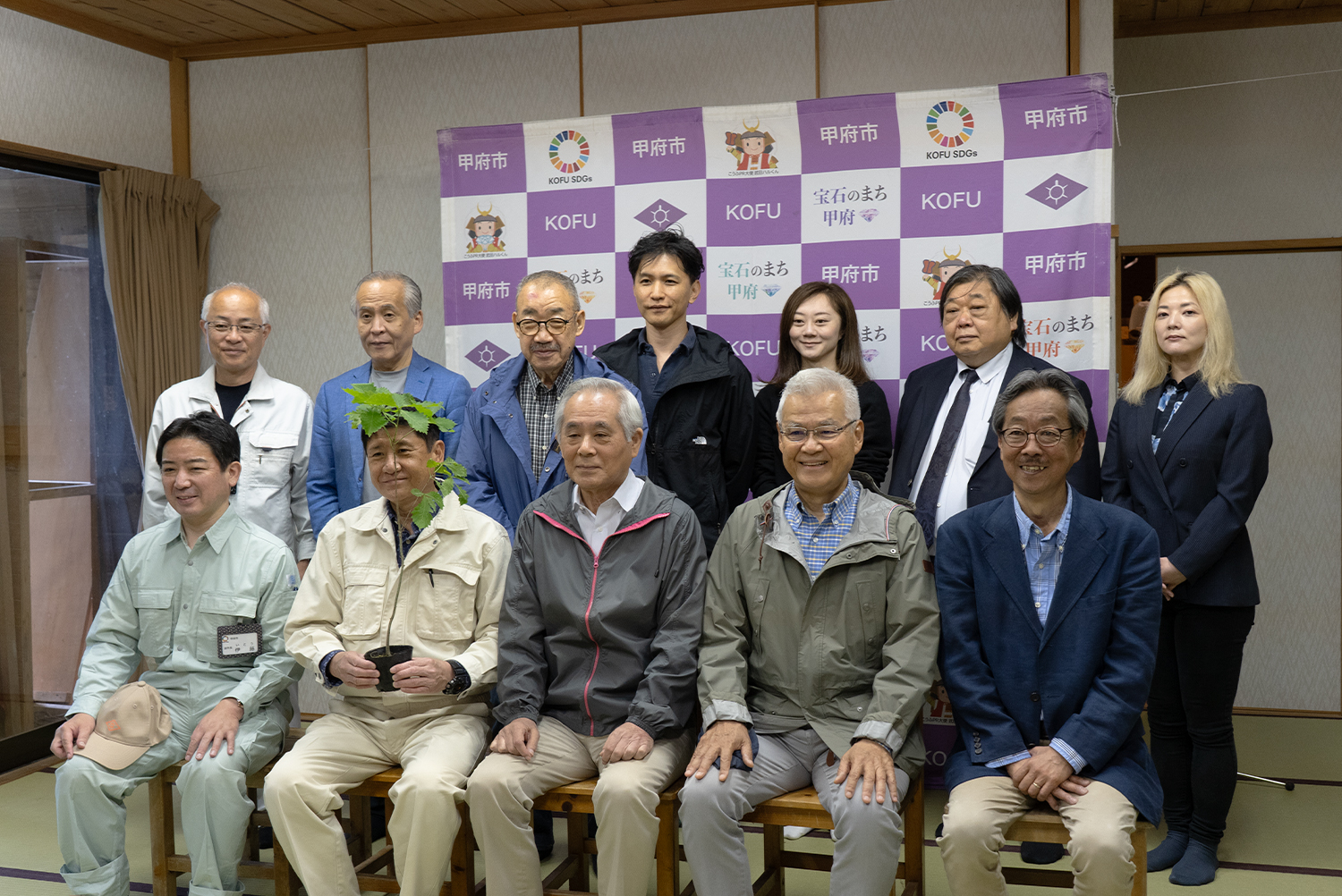
Alongside the mizunara seedlings, Mr. Koshimizu presented Mayor Higuchi with a roster bearing the names of all our "In" community members.
This year's planting was also joined by two representatives, including the Secretary-General, from the General Incorporated Association Asia-Africa-Arab 55.
Japan is home to more foreign embassies than any other country in Asia, and this organisation works to promote exchange between Japan and the regions of Asia, Africa, and the Arab world — serving as a bridge that connects ambassadors from various countries with Japanese businesses.
We invited them to take part in this mizunara planting activity in the hope that it might help maintain and enhance the value of Japanese whisky and allow its deeper appeal to be better known among an international audience.
Cutting the Mizunara Tree
Whisky aged in mizunara casks has become something of a symbol of Japanese whisky itself. To craft these casks, the ideal raw material is said to be a straight-growing tree at least 60cm in diameter. In Kōfu City, however, mizunara grows at altitudes of 1,000 metres or higher, often in locations that make felling and transport extremely difficult — and it is said to take over 100 years for a tree to reach that ideal diameter. What's more, mizunara trees that grow perfectly straight are quite rare; most, in their search for sunlight, tend to grow with noticeable bends and curves.
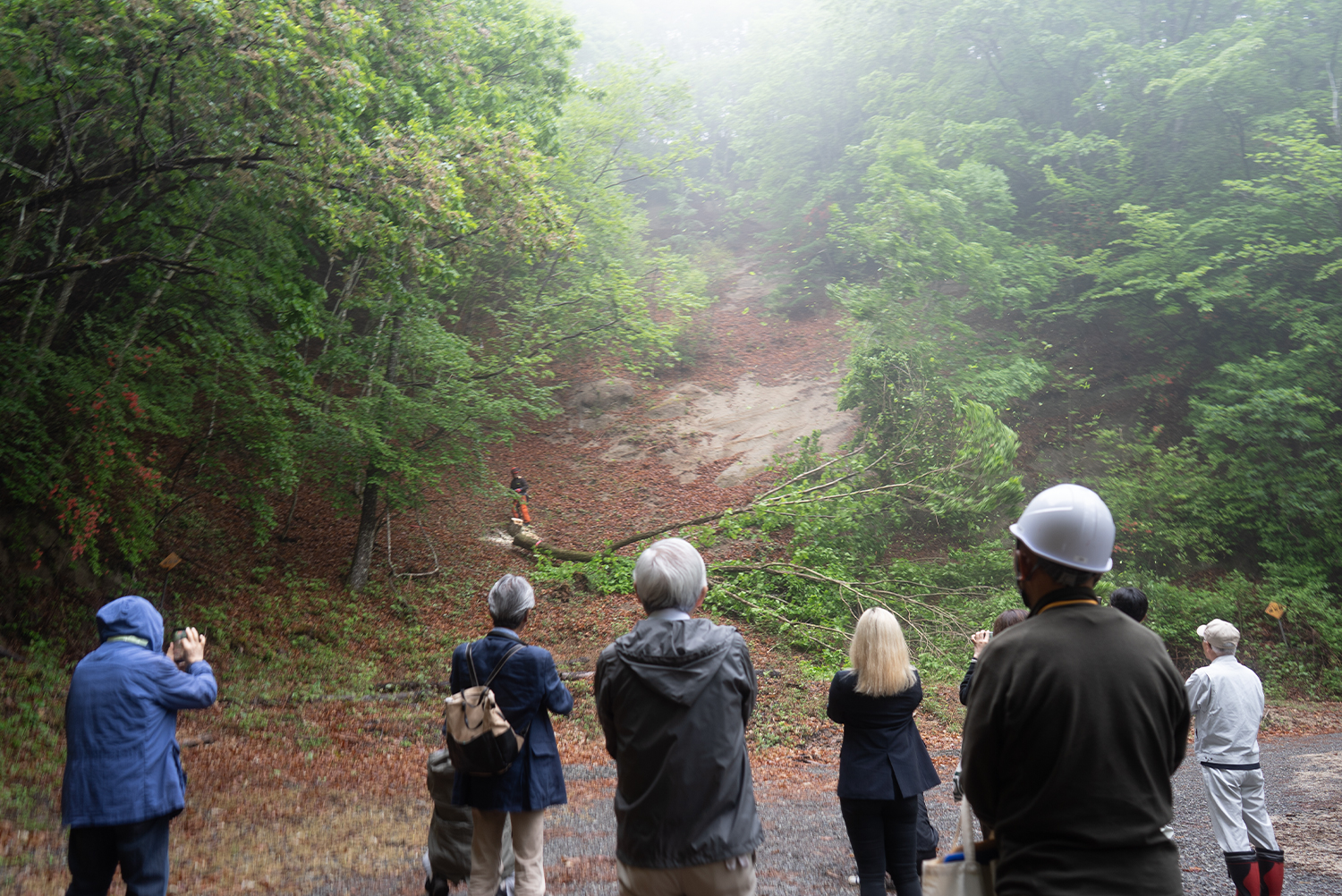
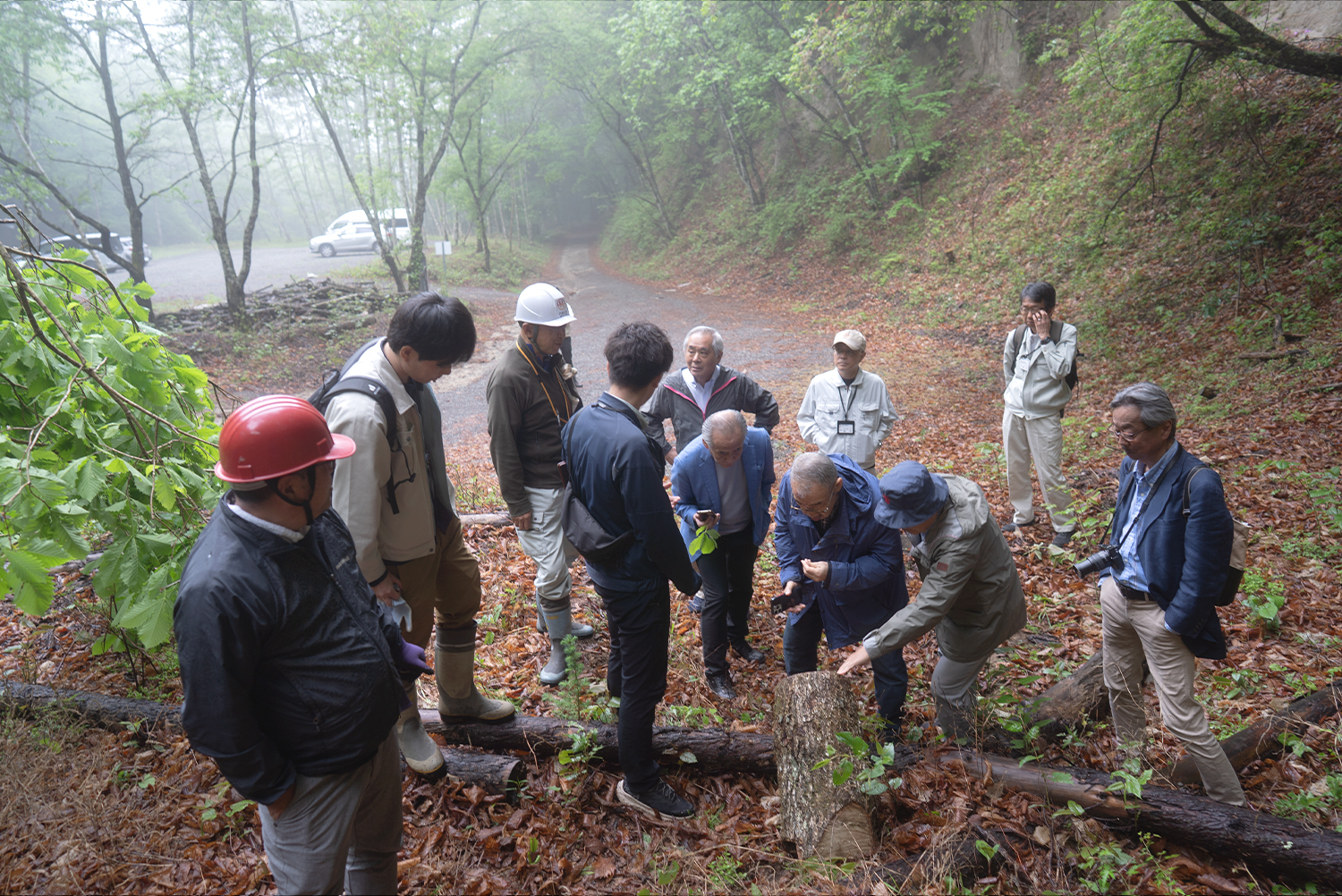
While the tree felled on this occasion was not suitable for cask-making, we arranged for the Kōfu City team to carry out the actual felling of a mizunara tree, so that everyone present could see firsthand what a mizunara tree truly looks like.
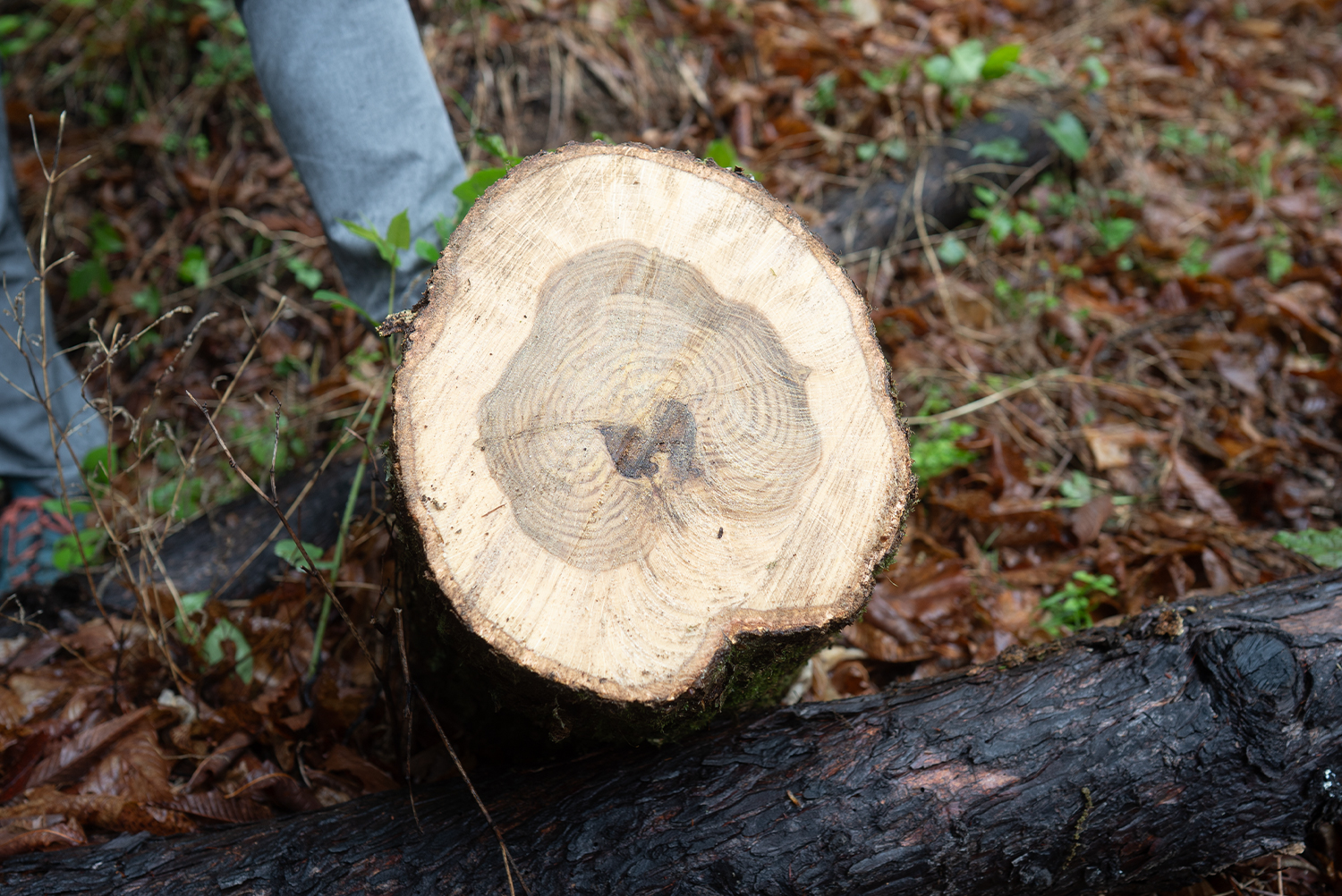
This particular mizunara tree measured somewhere around 30 to 40cm in diameter. Looking at its growth rings, we could tell it was roughly 40 years old. For its first 30 years or so, the rings were narrow, suggesting a slower rate of growth — but from that point onward, the rings become noticeably wider and more evenly spaced, showing a steady and consistent growth rate.
In Hokkaidō, many mizunara trees reportedly take around 200 years to reach a diameter of just 60cm, which makes the growth rate of this Kōfu mizunara — reaching 30 to 40cm in under 40 years — all the more striking. It isn't entirely clear whether mizunara in Kōfu simply grows faster as a rule, but in any case, it turns out that the living part of a tree is the layer closest to the bark. Witnessing the tree being cut this way really brought home, in a deeply personal way, just how remarkable — and how precious — the process of a tree's growth truly is.
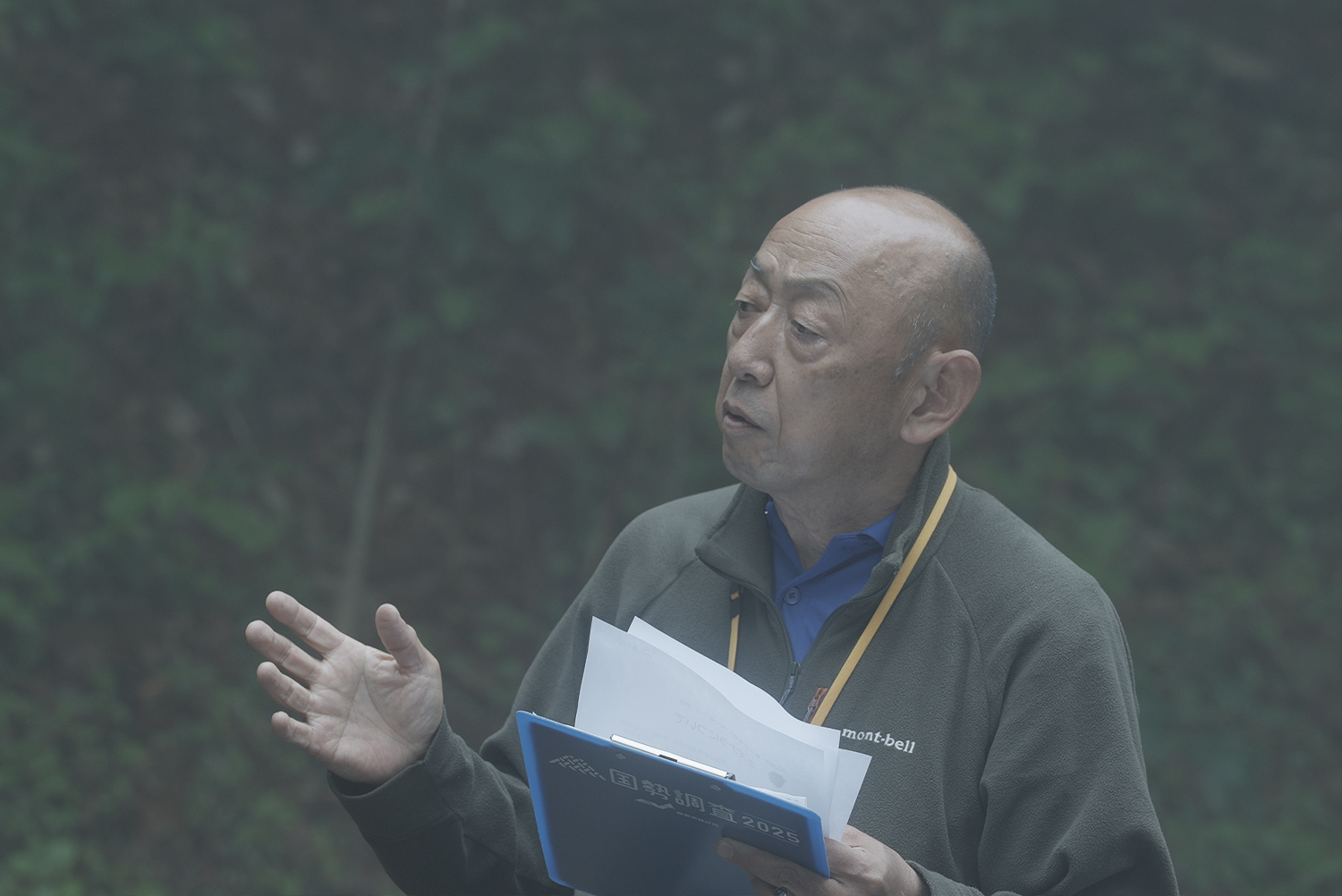
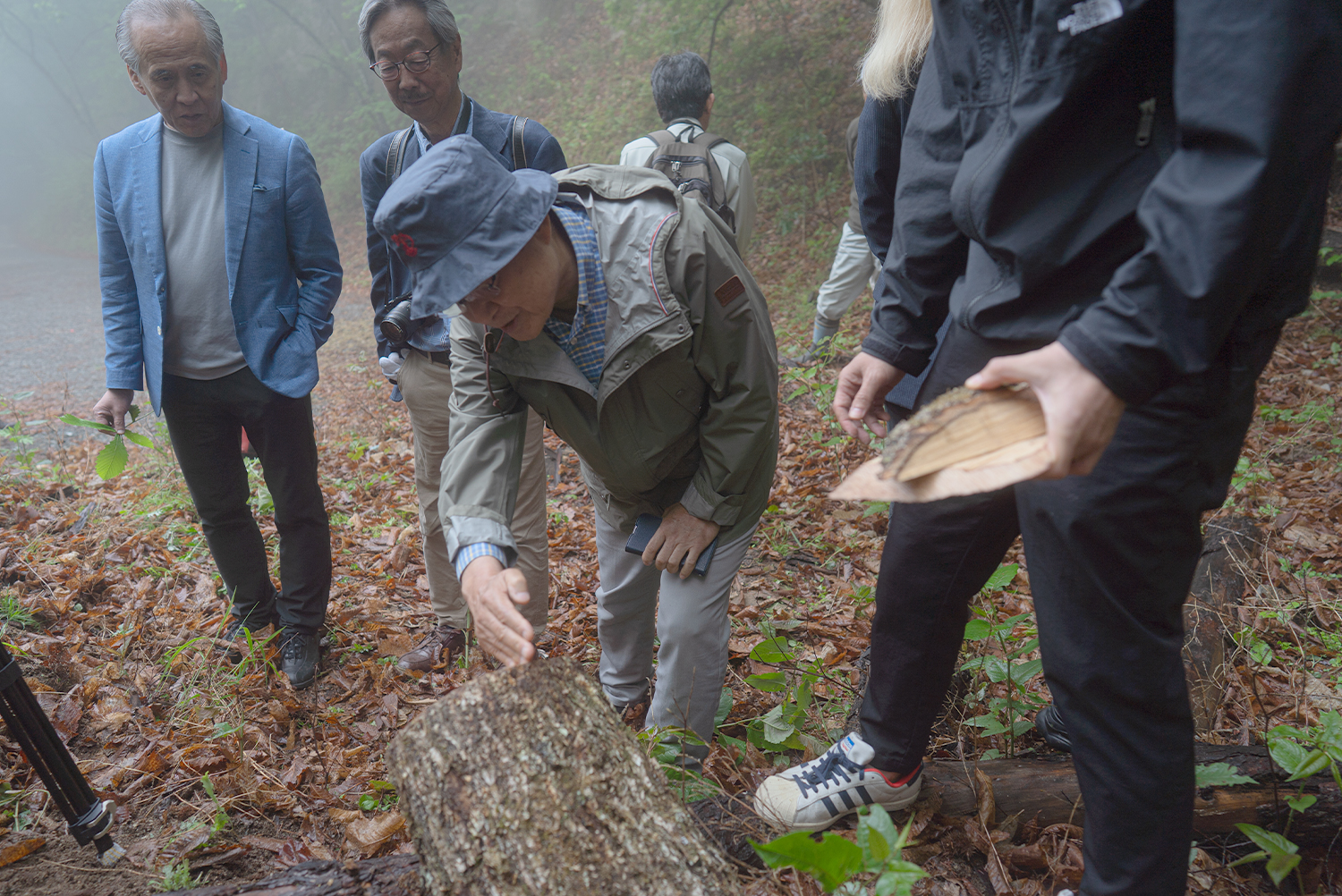
According to Mr. Kentaro Kojima, a Regional Revitalisation Cooperator and Certified Forest Management Specialist who kindly explained the process to us, mizunara is a tree that retains a high water content, with a relatively high density and stable wood properties. He noted that a well-balanced cycle of planting and felling mizunara is highly beneficial to the broader forest and water ecosystem — a point that lent significant weight and validation to this planting initiative.
It was truly heartening to come away with a genuine sense that both the planting of mizunara and the effective use of its timber, such as in cask-making, can make a meaningful contribution to the cycles of forest and water that sustain the wider ecosystem.
That said, we were told that a mizunara tree of this size still isn't large enough to produce even a single cask.
ウイスキー樽やワイン樽づくりにおいて、木は「柾目取り(まさめどり)」が必要となります。
柾目取りとは、木の中心(芯)から外側に向かって放射状に木材を切り出す方法です。隙間から液体が漏れるのを防ぎ、収縮や反りを抑えるために不可欠となります。
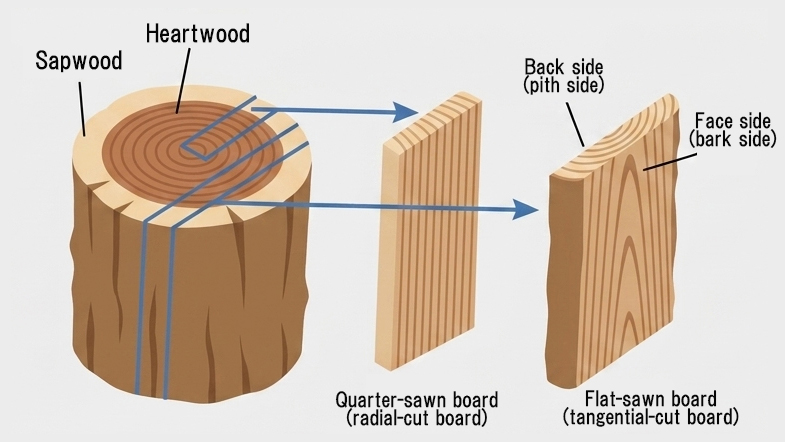
For making whisky and wine casks, the wood must be cut using a technique known as "quarter-sawing" (柾目取り, masame-dori).
Quarter-sawing involves cutting the timber radially, from the center (the heart of the tree) outward toward the bark. This method is essential for preventing liquid from leaking through the grain, as well as for minimizing shrinkage and warping.
Encountering a Mizunara Tree Over 80cm in Diameter
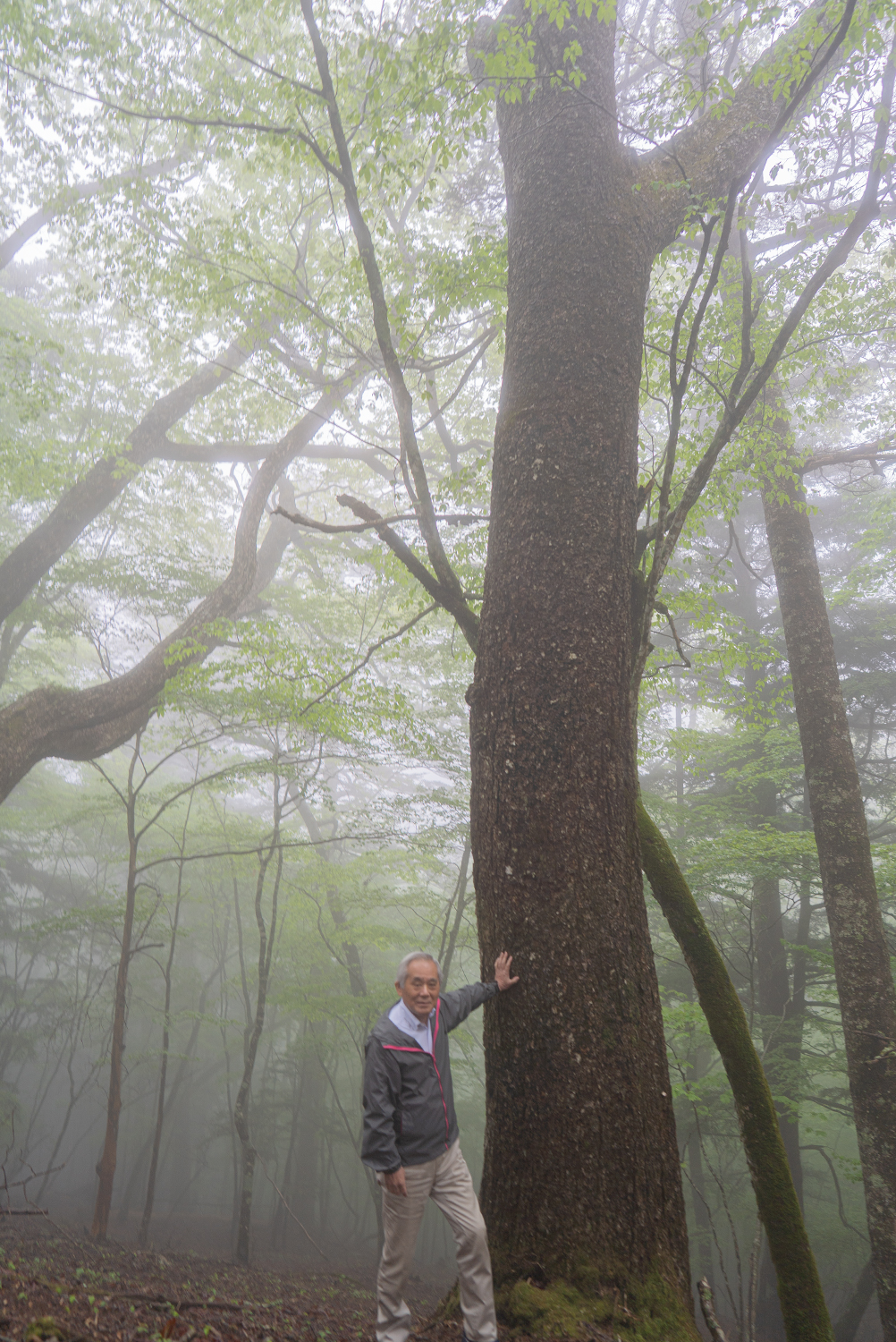
Having felled the tree and absorbed everything we'd learned, we made our way to our next destination — and there, remarkably, stood a mizunara tree of extraordinary size, its diameter exceeding 80cm. According to Mr. Kentaro Kojima, it was likely over 200 years old, with some in the group suggesting that a tree of this size would be more like 300 years old, had it been growing in Hokkaidō.
What's more, it wasn't standing alone — all around it were other mizunara trees of similar scale and stature. Standing before that scene, we were simply overwhelmed by the presence of these trees: mysterious, powerful, and seeming to carry a message from nature itself.
"Could this tree become a whisky cask one day?"
"Mizunara trees over 150, even 200 years old, with diameters exceeding 60cm, aren't something that exist in endless supply — they truly are precious, especially now."
Standing there with that realization, you come to genuinely appreciate just how valuable whisky really is. And once you sense the depth of this background, you begin to understand that drinking Japanese whisky is, in itself, a genuine privilege — a moment of real happiness.
It is in moments like these that you truly understand why whisky has long been called the "water of life."
At present, oak wilt disease is occurring in regions across the country, meaning that even mizunara trees that have grown to such impressive size could be lost at any time, with no way of knowing when. Rather than simply waiting for these trees to die, we came to understand just how vital it is to work alongside forestry professionals — carefully selecting which trees to fell, putting their timber to meaningful use, and thoughtfully managing the cycle of planting and felling.
Returning to Kōfu City Hall to Discuss Future Goals
Having completed the planting, felled a tree, gained new knowledge, and witnessed firsthand the remarkable potential held within a single large mizunara tree, the group came together to discuss what lies ahead.
Centered on the idea of protecting the forest and water cycle, and of giving back — through mizunara — to both the Japanese whisky industry and its fans, the discussion turned to how cask-making might be realized in Kōfu, and how this activity could continue to grow as a unified, community-wide effort.
Through planting, we aim to preserve mizunara for generations to come — for the future of Japanese whisky.
What kind of "visible form" should be created to help more people come to appreciate mizunara as the precious resource it truly is? And what will it take to ensure this activity continues into the future?
Only by bringing the private and public sectors together as one can we build something truly sustainable — a form that will carry on for many years to come. Regular discussions and concrete steps toward realizing this vision with Kōfu City will now begin.
Networking Reception
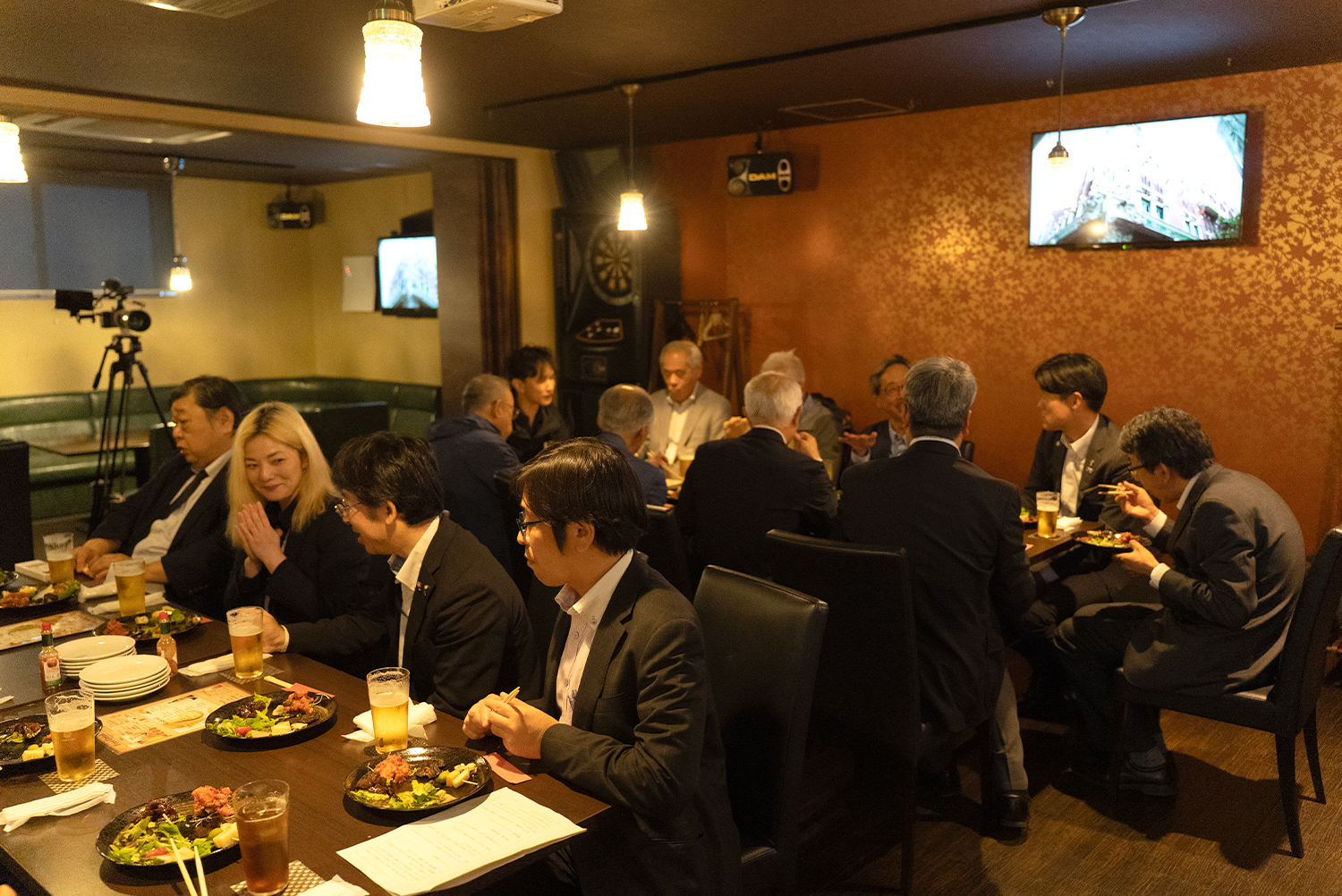
Following on from last time, we once again held our networking reception at "Dining Amusement Bar EBL," the establishment run by Mr. Yohei Saito, Chapter Head of the Yamanashi Branch of the Nippon Bartenders Association.
After opening remarks from Mr. Koshimizu, Mr. Sakuma led the toast, and the reception got underway with a lively discussion: under the theme of creating a "Kōfu Highball" to better convey the appeal of Kōfu, what exactly would it take for a highball to earn that name?
This year marked the third mizunara tree planting we have held.
Casks made from mizunara — often referred to as "wa-daru," or Japanese casks — have drawn attention from the global drinks industry and beyond. The potential held within mizunara is such that it can come to symbolize Japan's broader culture of sake and spirits as a whole.
With each gathering, we can genuinely feel how much everyone's knowledge and passion continue to grow.
Going forward, our focus will extend beyond simply carrying out activities — we will work toward "making it real": creating something tangible that everyone can recognize and understand.
Making a cask is no small undertaking. The wood must first be felled and left to dry as whole logs for a full year, then milled and dried again for another two to three years, before the cask can finally be assembled. In total, a finished cask doesn't come into being until three to four years after the tree is first cut — meaning we still have a long road ahead of us.
So what should we do in the meantime? What should we communicate? What form should our efforts take?
What can we bring into tangible reality — both for the members of "In," and for the people of Kōfu City?
I believe we are getting closer to finding that answer.
And to all our members who have supported us along the way, we would like to once again express our deepest gratitude.
The names of all members as of 20th May 2026 have been recorded on the roster presented to the Mayor of Kōfu, forever marking their place as contributors to this third mizunara tree planting and to the future of the Japanese whisky industry.
The video below documents the activities described above, with member names included in the credits at the end.
Our heartfelt thanks go out to everyone in Kōfu City, and to all our members.
2026 3rd Annual "Building Forests for the Future: Kōfu"
~The Mizunara Oak That Nurtures Japanese Whisky~
ー Agreement ー
Purpose
This initiative seeks to promote the development of sustainable forests for future generations through a collaborative partnership between Kofu City, Seiichi Kosumi, and the Japanese whisky community “In,” led by My Concierge Japan, Inc.
By harnessing the unique resources, strengths, and expertise of each party, the project aims to contribute to the continued advancement of the Japanese whisky industry, while also supporting the broader objectives of the Sustainable Development Goals (SDGs).
Objective of Tree Planting
To protect the watershed forests vital to the daily lives of Kofu residents and to support the cultivation of mizunara oak—an essential component in the production of Japanese whisky—this initiative will involve the planting of mizunara trees within municipally owned forests in Kofu City.
